






Operating as a vendor at fairs, festivals, markets, or community events requires more than great products and a good booth setup. Fire safety compliance—especially for tents and canopies—is a core regulatory requirement with real safety, legal, and financial consequences. This guide explains how fire certification and testing works, who is responsible, how vendors can verify compliance, and the risks of non-compliance or fraudulent certification, with extra depth for mobile food vendors.
Why Fire Safety Certification Matters for Outdoor Vendors
Certified fire safety compliance is not simply bureaucratic paperwork. It exists to reduce the likelihood of fire, slow flame spread, and protect people and property at outdoor gatherings. Vendors using tents or canopies that have not been tested or certified can face refusal of entry at events, fines, insurance loss, and even legal liability if injury or damage occurs. For food vendors, whose operations often include cooking equipment and open flames, fire safety compliance is doubly critical.
Before we dive into specifics, it’s essential to understand the core fire safety standards and certifications that most event venues and fire authorities require.
Key Fire Safety Standards for Canopies and Tents
There are two widely accepted standards for flame resistance of fabrics used on tents:
NFPA 701 — Standard Methods of Fire Tests for Flame Propagation of Textiles and Films
- Published by the National Fire Protection Association (NFPA).
- Specifies flame propagation testing for textiles, with Test Method 2 being the relevant portion for outdoor tents and membrane structures.
CPAI-84 — Standard for Camping Tent Fire and Flame Resistance
- Industry standard for outdoor tents and canopies, especially in North America.
- Provides specific, rigorous flame resistance criteria tailored to the types of fabrics and use cases common to canopies and vendor tents.
Many vendors see “fire retardant” labeling, but labeling alone is not enough—the material must be tested in an accredited lab and meet these standards in order to be recognized by fire marshals and inspectors.
Who Performs the Testing?
Important distinction:
- NFPA and CPAI are standards, not testing laboratories.
- Testing must be conducted by an independent, accredited testing laboratory. These labs perform the standardized tests defined in NFPA 701 and CPAI-84 and issue test reports based on results.
The testing lab’s role is technical evaluation. They measure a fabric’s flame propagation characteristics and issue a test report. A positive test report forms the basis for certification or registration.
Who Issues the Certification or Registration?
After testing:
Manufacturer Certification / Label
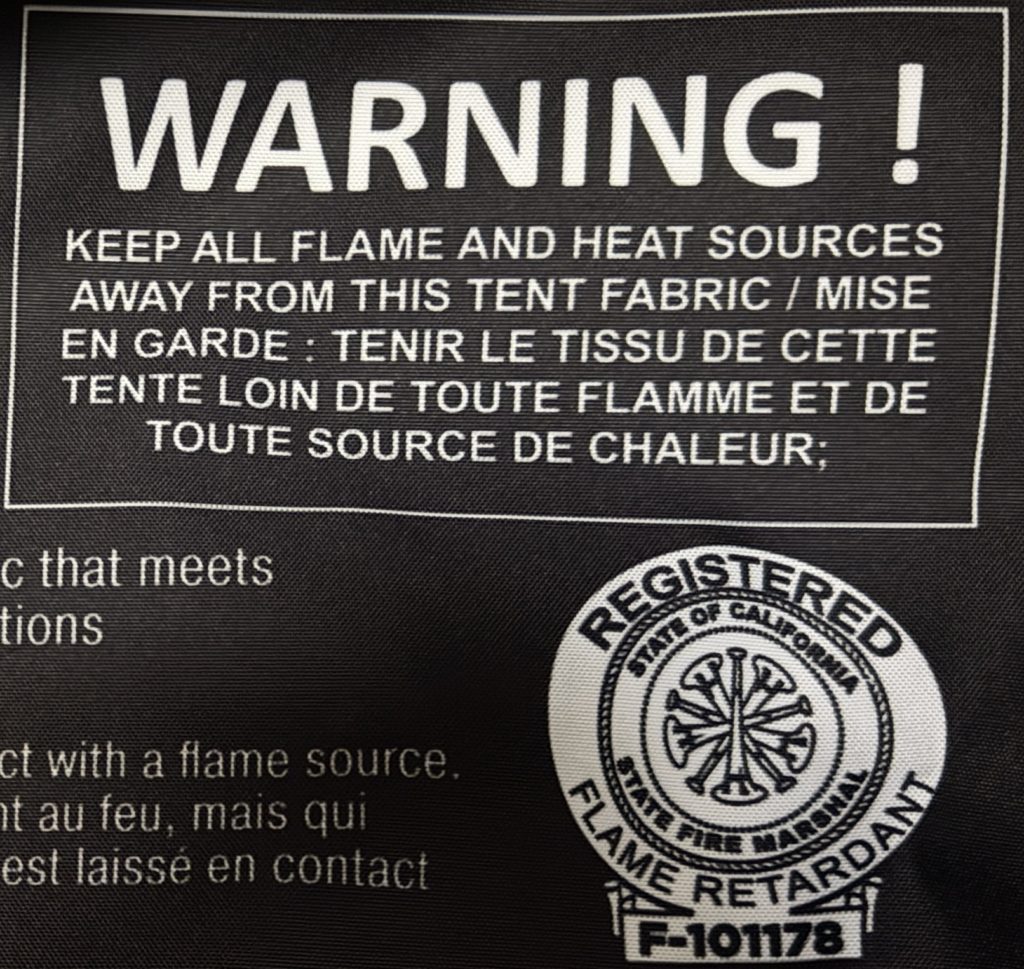
- Many reputable manufacturers put a certification label sewn into the canopy that refers to the testing standard achieved (e.g., NFPA 701 or CPAI-84), the testing entity, and often a registration or certificate number.
State or Local Authority Registration
- In some states, such as California, the State Fire Marshal (SFM) maintains a registration of flame-resistant fabrics and products that meet their standards. The official registration number and seal may be required on products sold in that jurisdiction.
Fire Marshal Approval
- In local jurisdictions, the Authority Having Jurisdiction (AHJ)—usually the local fire marshal or fire prevention office—reviews submitted certificates and may issue permits for the use of tents or membrane structures at specific events.
Note: Some states and counties may have additional or separate certification requirements beyond NFPA or CPAI, and some fire officials accept only certain standards or combinations (e.g., NFPA 701 and a state fire marshal registration). Vendors should verify local requirements well in advance of events.
Who Inspects for Fire Compliance?
There are typically two layers of inspection:
1. Pre-Event Plan Review / Permit Application
- Event organizers or vendors submit certificate documentation to the local fire department or event AHJ as part of tent permits or special event permits.
- Permits usually have to be submitted 30 days or more before the event in many jurisdictions.
2. On-Site Inspection
- Fire marshals or inspectors may perform field inspection prior to or during an event to check:
- That tents/canopies have fire certification labels or documentation on site.
- That fire extinguishers, egress paths, and other safety provisions are in place.
- That the canopy materials and decorative materials meet flame retardant criteria.
If a certificate is missing or inadequate, the inspector may require removal of the tent, which can stop a vendor from operating that day.
How Vendors Can Verify Real Fire Certificates
One of the most overlooked areas is how vendors can confirm that their supplier’s certificates are legitimate and accepted by authorities. Here are practical steps:
1. Ask for Full Documentation Upfront
Before purchasing:
- Ask the manufacturer or seller for:
- The test report from the independent lab.
- The certificate or registration number.
- Information on the testing entity and the specific standard tested (e.g., NFPA 701 Method 2, CPAI-84).
Reputable sellers provide these without hesitation.
2. **Check the Label/Affixed Certificate
A proper fire certificate includes:
- Manufacturer name
- Fabric description and size
- Name of the testing lab
- Test standard (NFPA/CPAI)
- Certificate or registration number
- Date of issuance or treatment
- Occasionally state fire marshal registration information (if applicable)
Labels sewn into the canopy make on-site inspection straightforward.
3. Verify With the Testing Lab
Many accredited labs maintain online directories or report lookup tools where you can enter a certificate number or product identifier to confirm:
- The test was actually performed.
- The results are positive.
- The date and scope of the test.
If a vendor refuses or cannot produce verifiable documentation, consider that a significant red flag.
4. State Fire Marshal Resources
In states that register flame-resistant products (e.g., California), you can often verify the registration number with the State Fire Marshal’s office to confirm:
- The product was registered under the proper standard.
- The registration has not expired or been revoked.
5. Local AHJ Acceptance
Some fire marshals will only accept specific testing standards or labels (e.g., NFPA 701 plus a state registration), so verify with the event organizer or local fire authority if you’re unsure.
Regulatory Variations: State and County Differences
Fire safety regulations are not uniform across the United States. What is accepted in one area might not be in another.
California
- California’s Title 19 and related fire codes may require state fire marshal registration in addition to NFPA 701 or CPAI-84 testing.
- Some local enforcement agents may interpret standards differently.
Washington State / Seattle
- Requires a flame resistance certificate, valid for a defined period (often 1 year), or affixed label indicating NFPA 701 or an approved standard on the item.
Fairfax County, Virginia
- Tents must have affixed labels and an affidavit detailing the flame propagation performance criteria and testing details.
Smaller Jurisdictions
- Fire marshals at the county or event level sometimes adopt more stringent requirements than the base model codes, including:
- Specific documentation format
- Local inspection before or during event
- Requirements for decorative materials under canopy structures
Key takeaway: Always confirm the requirements with the event organizer and the local fire marshal well before the event date.
Special Considerations for Mobile Food Vendors
If you prepare or sell food under a canopy, fire safety expectations are stricter due to open flames, cooking oils, and grease vapors.
Additional Permits and Inspections
- Fire department inspections are almost always required before a food vendor can operate. These go beyond canopy material testing to include:
- Cooking equipment safety
- LPG/cylinder storage and connection
- Ventilation and hood systems
- Portable fire extinguishers and suppression systems
Fire Extinguishers and Suppression
- Depending on cooking type, vendors may be required to carry multipurpose fire extinguishers (e.g., 2A:20-BC) and/or Class K extinguishers for grease fires.
Interaction With Canopy Certification
- Fire inspectors may refuse a vendor permit if the canopy’s fire certificate is missing, expired, or invalid.
- Food vendor operators should bundle all fire-related documentation, including canopy certification and cooking equipment approval, during inspection.
Risks of Using Non-Certified Canopies or Fake Certifications
Using non-certified canopies or fake certificates carries multiple layers of risk:
1. Event Denial and Lost Revenue
- Event organizers often require proof of certification to set up at a fair.
- Lack of acceptable certification can result in denial of entry or removal from the event.
2. Fines and Penalties
- Fire code violations can lead to civil fines or administrative penalties.
- Repeat non-compliance may lead to escalated fines and potential business license issues.
3. Insurance and Liability Exposure
- Insurance policies often require compliance with applicable codes and standards.
- In the event of fire damage, insurers may deny claims if it’s found the structure was not compliant. This exposes vendors to full financial liability.
4. Criminal Penalties for Fraudulent Certificates
- Presenting fraudulent certificates—knowingly using fake or forged numbers or test reports—can rise to criminal fraud charges in some jurisdictions.
- Even unintentionally relying on fake certificates from unverified suppliers could lead to regulatory action.
5. Civil Lawsuits and Personal Risk
- If a fire incident injures attendees and it’s discovered the vendor’s equipment was not compliant, the vendor could face civil suits for damages, medical costs, or punitive damages.
How to Protect Your Business and Customers
Educate Yourself and Your Team
Understanding fire codes, standards, and certification requirements is a core part of vendor preparedness.
Maintain Organized Records
- Keep all certificates, test reports, permits, and inspection results in a dedicated binder or digital folder.
- Bring these to every event inspection.
Renew Certifications When Required
- Some certificates or registrations have expiration periods or require renewal. Verify dates and renew promptly.
Partner With Reputable Suppliers
- Source canopies and tents from vendors with a proven track record and transparent documentation.
Confirm Local Requirements
- Regulations may change from event to event, or from state to state. Contact local fire authorities or event organizers before every major event.
Conclusion
For outdoor business owners—especially mobile food vendors—fire safety certification isn’t optional. Fire testing, certification, and inspection protect people, property, and your business’s viability.
Understanding how testing standards like NFPA 701 and CPAI-84 work, who performs them, and how to verify certificates empowers you to avoid fines, denied entry, insurance problems, and even criminal liability. Different states and counties add their own layers of requirements, so proactive verification and documentation are your strongest tools.
By sourcing certified products, maintaining compliant processes, and routinely verifying documentation with accredited sources, vendors can confidently participate in events while safeguarding their business and customers.